Apartments in the white-village heart — cobbled lanes, the Guadalmina below, dinner two minutes from your door.
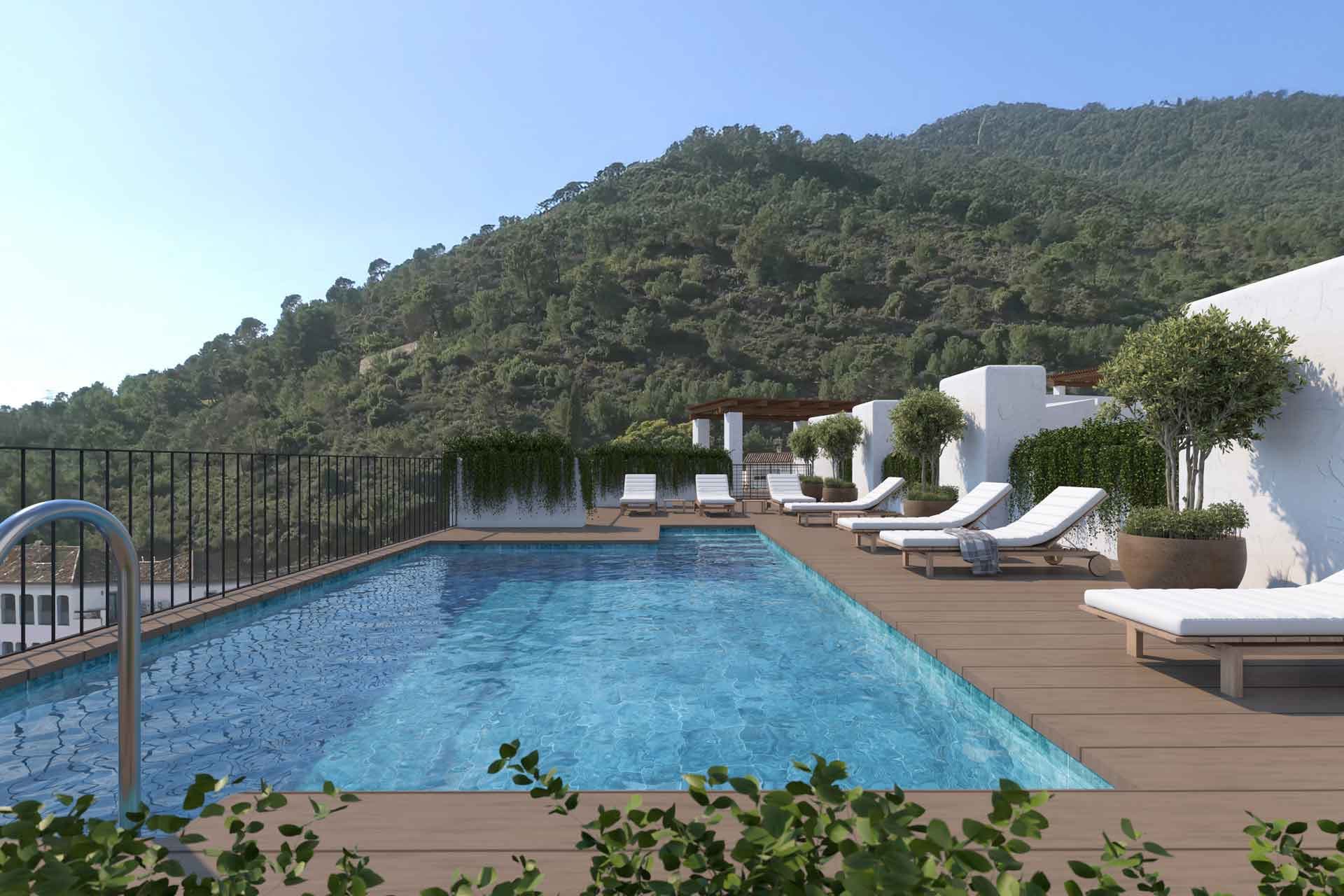
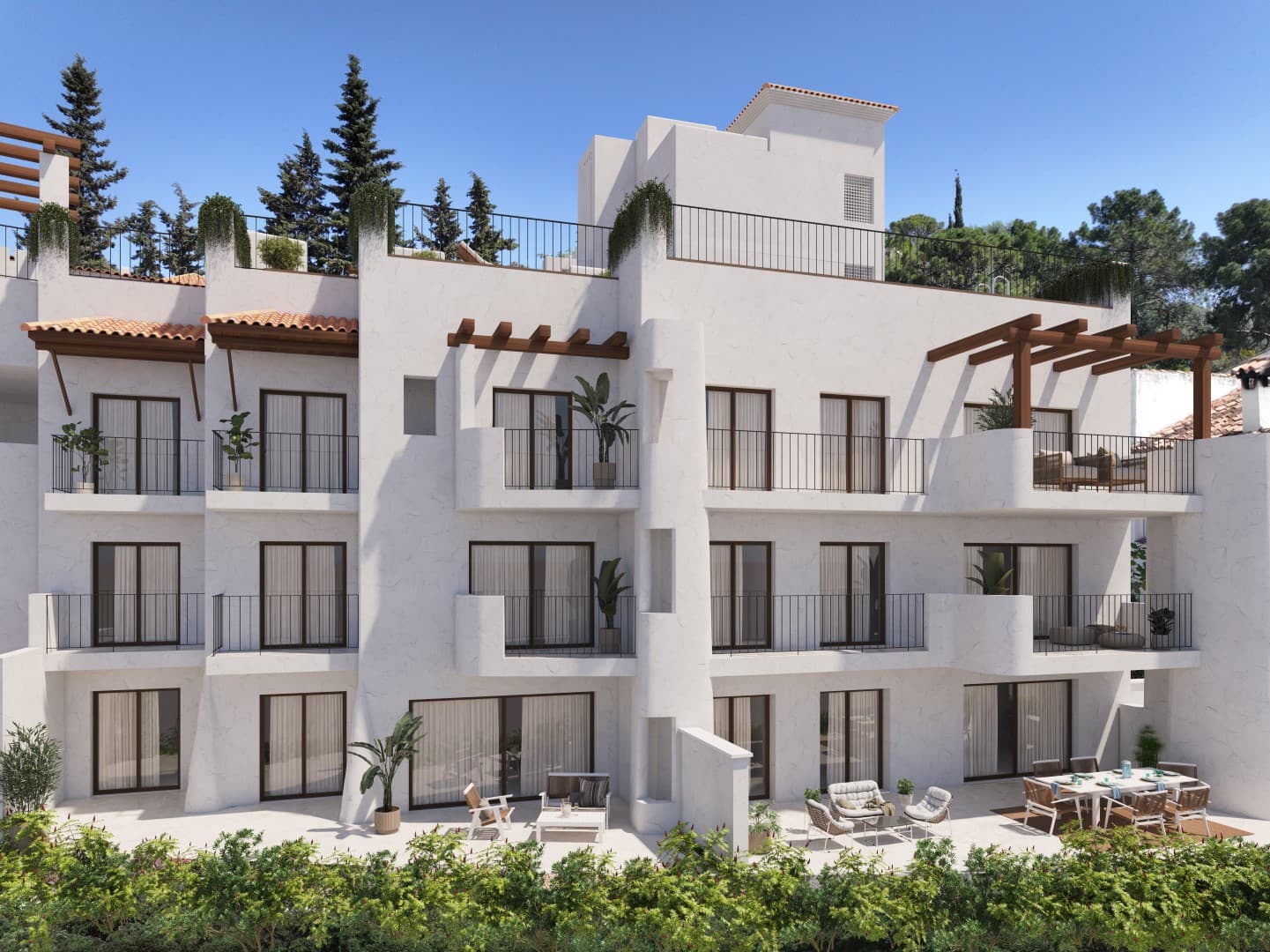
Buying an apartment in Benahavis Centro means buying into the pueblo itself rather than a gated golf estate up the hill. Most of what trades here is one to three bedrooms, and the stock splits into two characters. There are the older village flats woven into the whitewashed lanes around the church and Plaza de Espana — smaller footprints, the odd genuine terrace with a valley view, walls you share with neighbours who have lived here for decades. Then there is the newer contemporary product, led by Riverside down by the Guadalmina river, where two and three-bed apartments and penthouses come with proper terraces, lifts, pools and parking, all still within a short walk of the centre.
The draw is being able to leave the car at home. Benahavis is the dining room of the Costa del Sol, and from a village apartment you can walk to most of the restaurants, the bakery and the few shops. That suits two sorts of buyer in particular: people wanting a lock-up-and-leave bolthole they can use a few weeks a year and let easily, and downsizers who want village life without the upkeep of a villa. We'll always tell you which terraces actually catch the afternoon light and which interior flats stay dark, because in a hillside village that varies enormously street to street.
Benahavís Centro — the Costa del Sol's dining-room village, white lanes above the Guadalmina gorge, fifteen minutes from the sand.
Seven kilometres up the river road
Benahavís Centro is the old village itself — the whitewashed core of Benahavís, set on a hillside in the first folds of the Serranía de Ronda, about seven kilometres inland from the coast at Guadalmina. One road climbs to it beside the Río Guadalmina, through the narrow Angosturas gorge, and what you find at the top explains the nickname: this is the dining room of the Costa del Sol, its restaurants packed along Calle Málaga and the small squares off it, long-established names like Los Abanicos among them, the kitchens fed for decades by the village's own catering school. Below the houses the river runs through rock pools where people swim in summer.
Apartments first, townhouses on the older lanes
Apartments set the tone here — mostly low-rise, Andalusian in style, with terraces facing either the gorge or back towards the mountains — and a steady run of village townhouses follows behind. Two pockets are worth knowing by name. La Aldea, in the centre, is the cluster of traditional-style homes the Scottish sculptor David Marshall laid out around his gallery, and it remains one of the prettiest corners of the village. El Casar, a short walk out, offers apartments and townhouses with communal pools, an indoor pool and a gym. On price, the village trades broadly around €5,000 to €5,500 per square metre: you'd typically expect €300,000 to €700,000 for an apartment depending on size, terrace and outlook, and from around €500,000 to a little over €1,000,000 for a townhouse.
Who the village suits
The mix is genuinely international, with a strong British presence across the municipality, but the common thread is people who want a working Spanish village rather than a gated estate — restaurants downstairs, neighbours who know your name, the coast in reach. Golfers do well from here: Los Arqueros, a Severiano Ballesteros design on the Ronda road, La Quinta and the Marbella Club Golf Resort are all a short drive, among the dozen or so courses within the municipality. Families have CEIP Daidín in the village for ages three to twelve, with Atalaya International College down the hill and school buses serving the area. One honest note we give every buyer: the restaurant streets are lively on summer evenings, so if you want silence, we'll point you to the upper lanes.
Getting around, and how we work
You'll want a car. The gorge road joins the A-7 near Guadalmina in around a quarter of an hour, putting San Pedro de Alcántara and its beach about fifteen minutes away, Puerto Banús around twenty, and Marbella twenty-five; Málaga airport is roughly an hour, and the A-397 above the village runs up to Ronda. The local bus to San Pedro exists but is thin, which is part of why the village keeps its calm. As for us: we have spent twenty years on this stretch of coast, we know which blocks hear the river and which hear the kitchen extractors, and we'll always tell you which homes are over-priced and why. If Benahavís Centro is on your list, drop us a line.