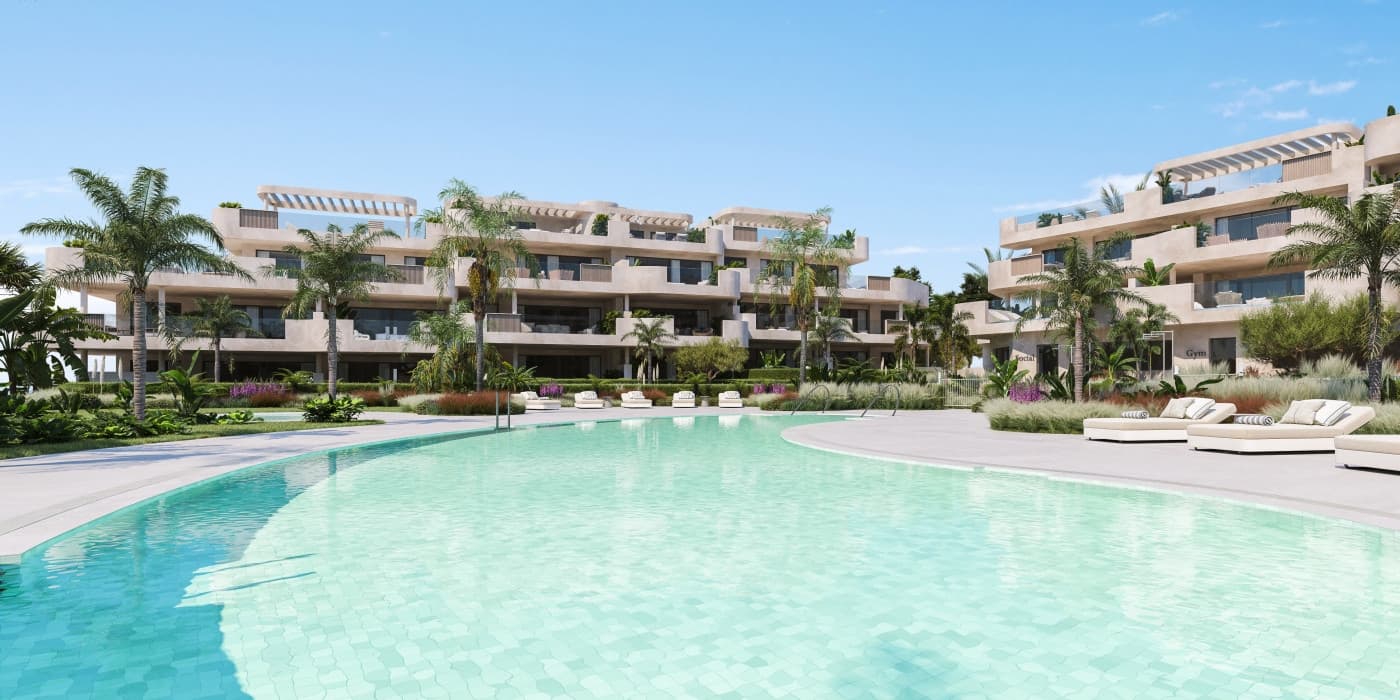
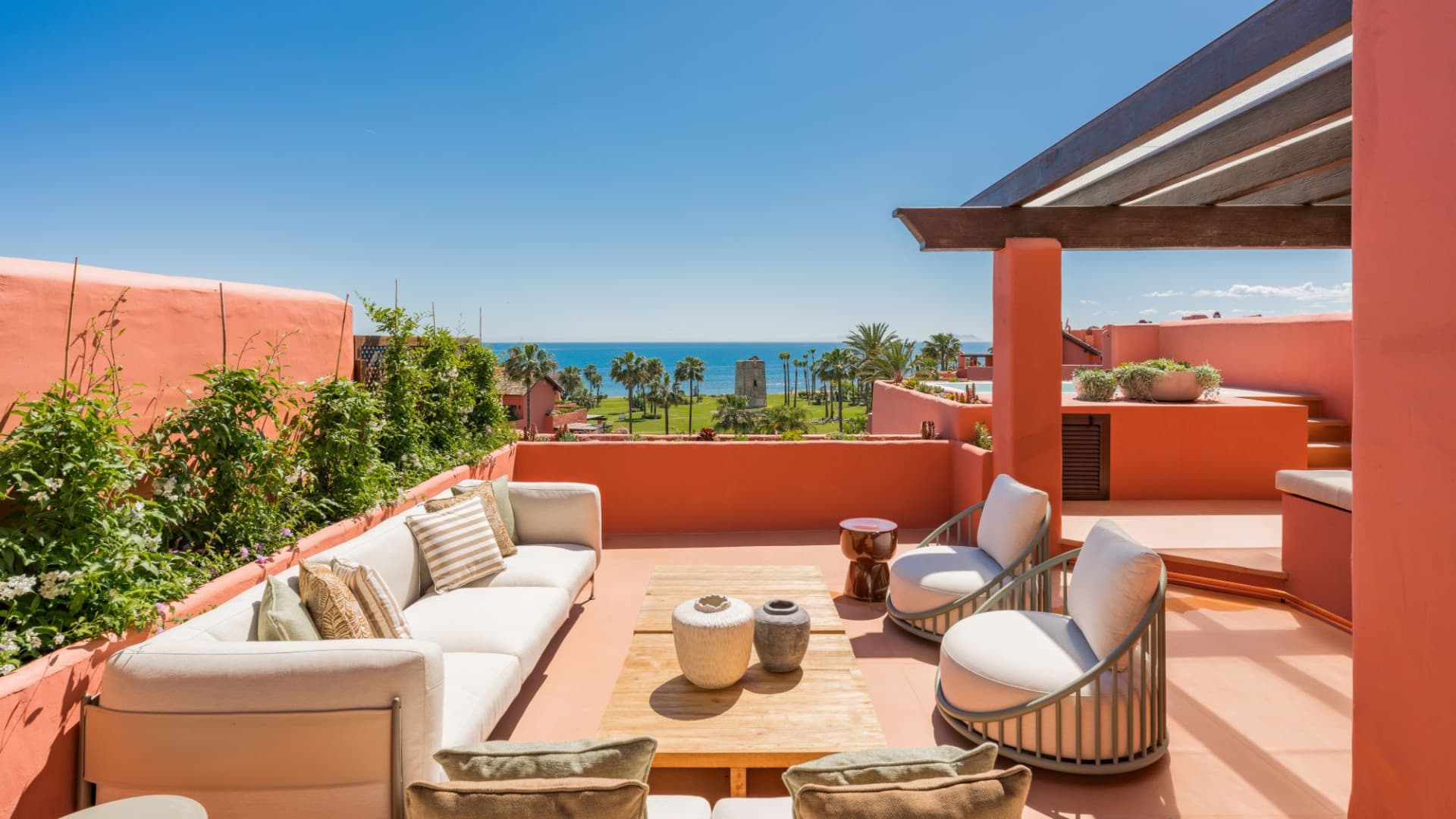
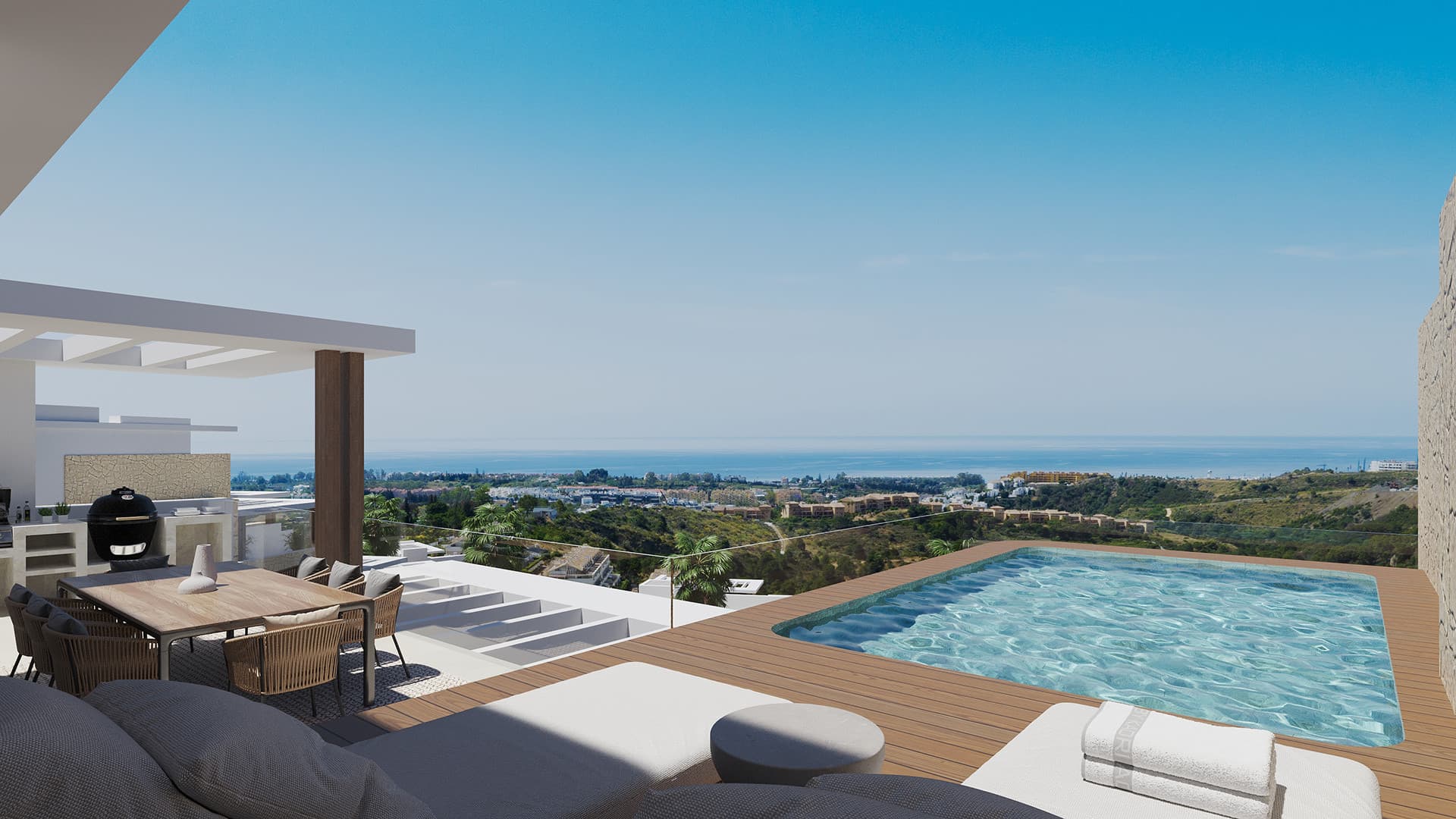
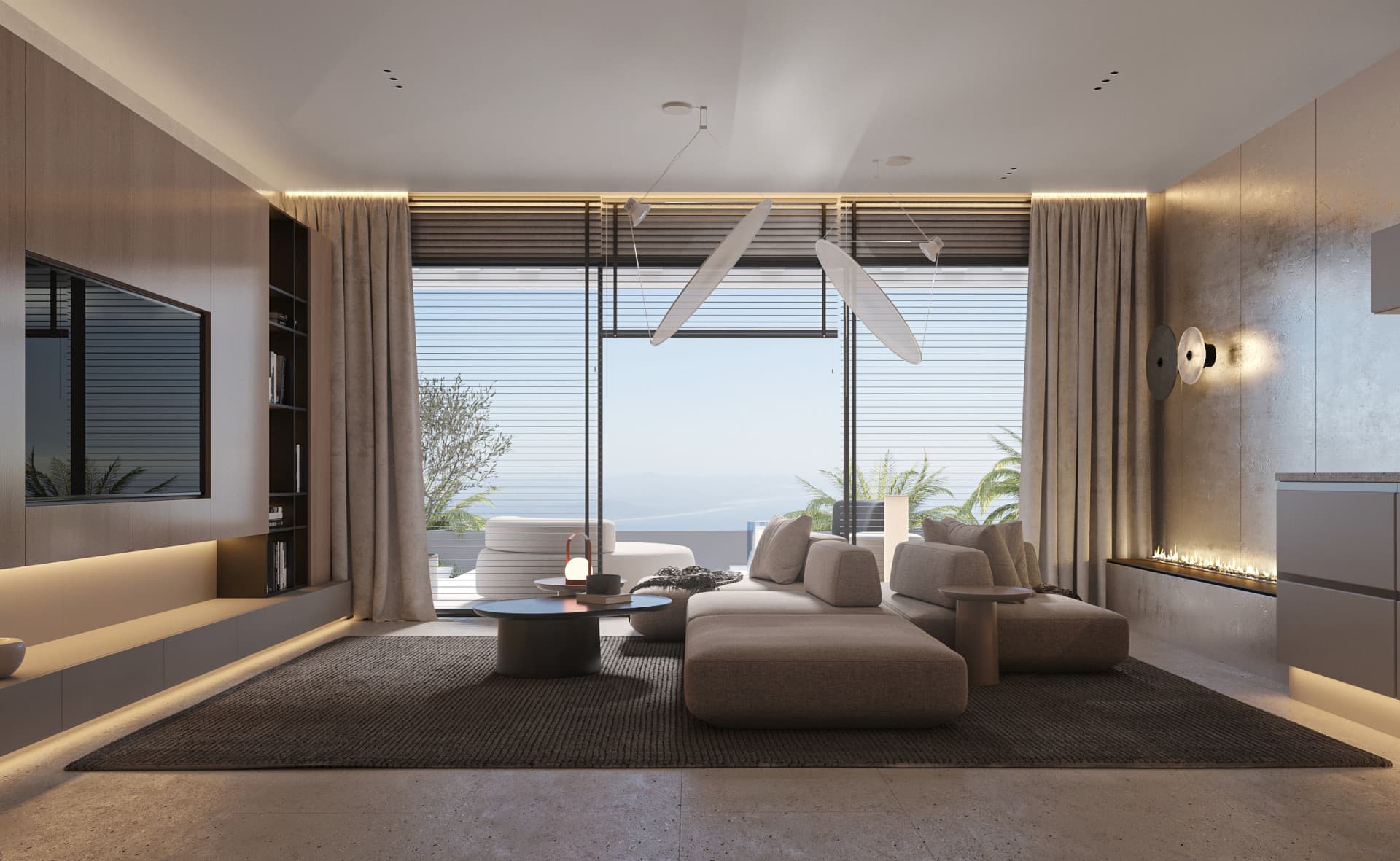
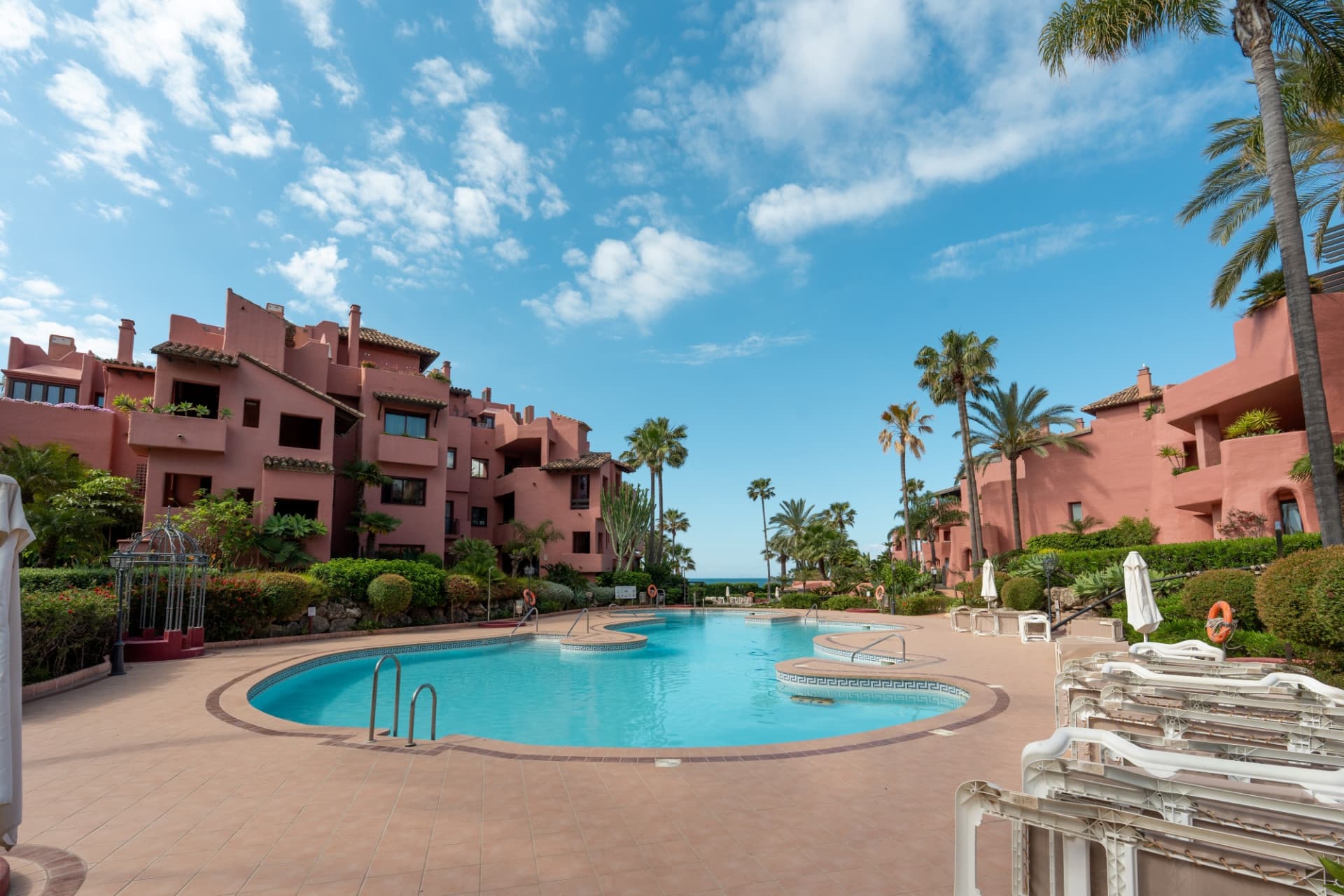
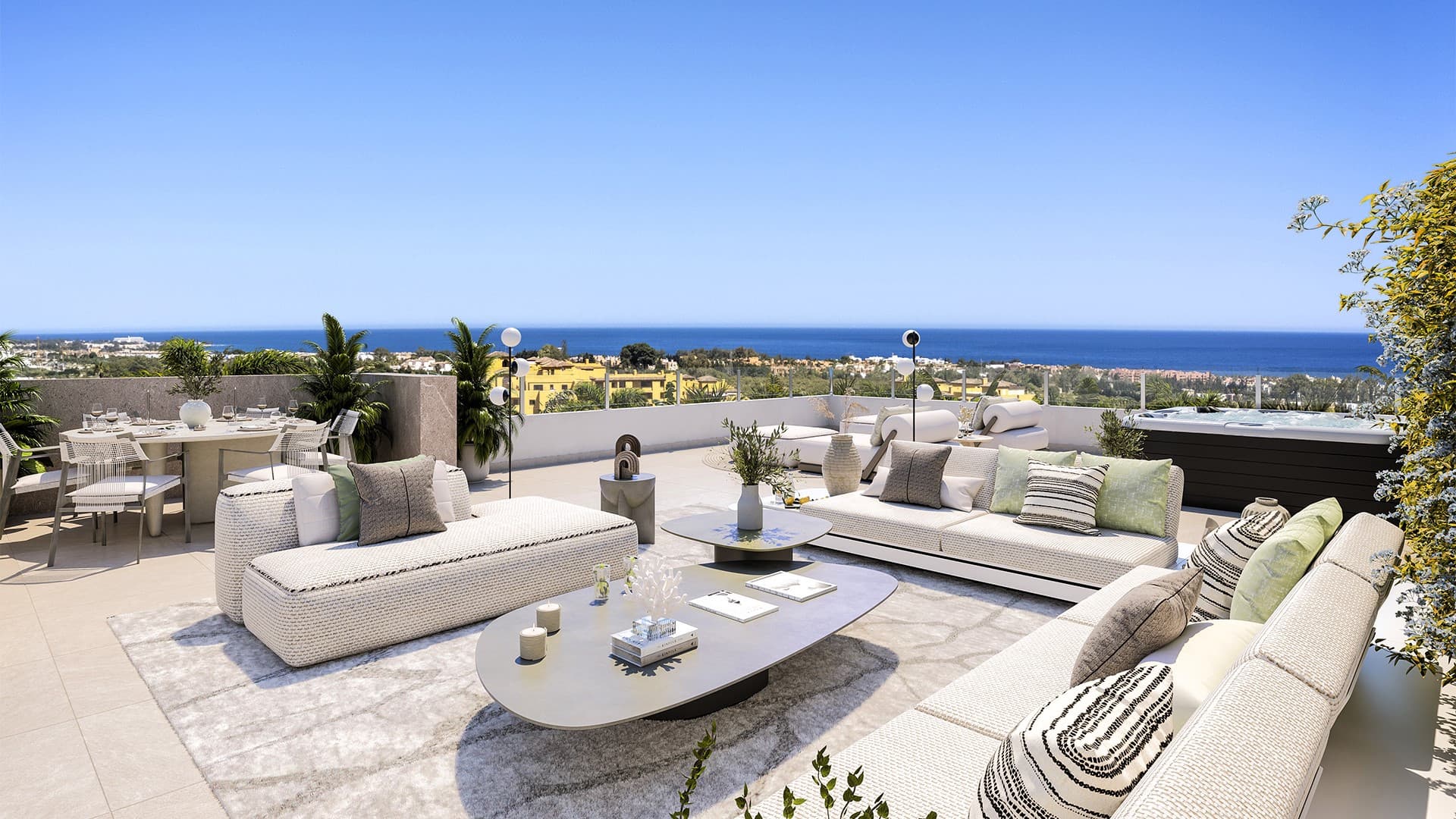
Duplex penthouses on Estepona's New Golden Mile — two storeys, a private solarium, the sea to Gibraltar.
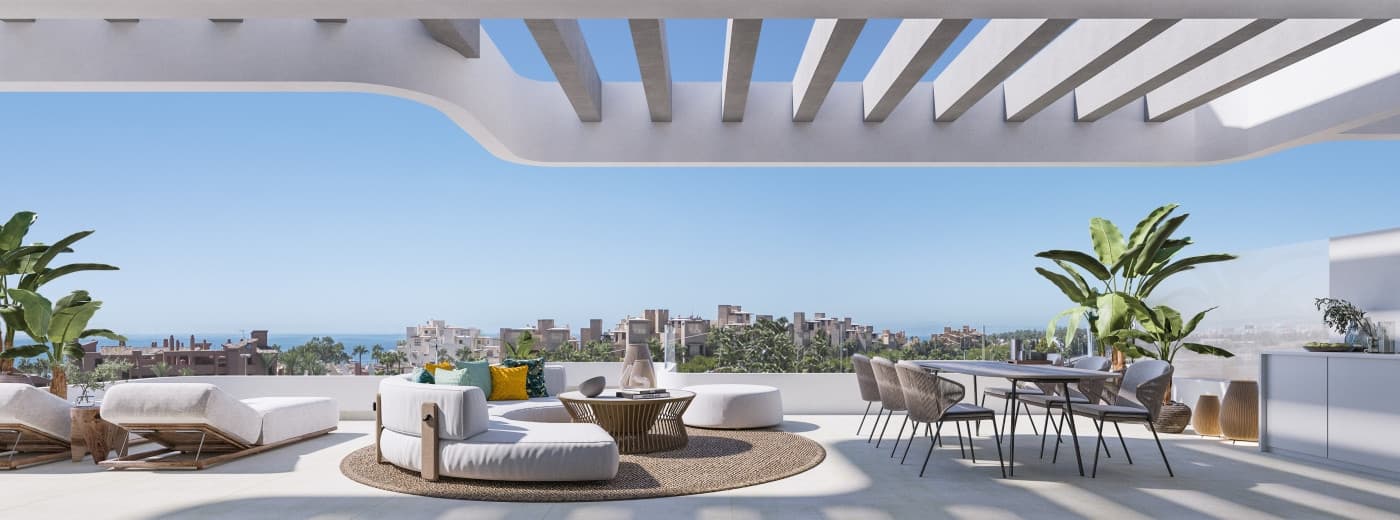
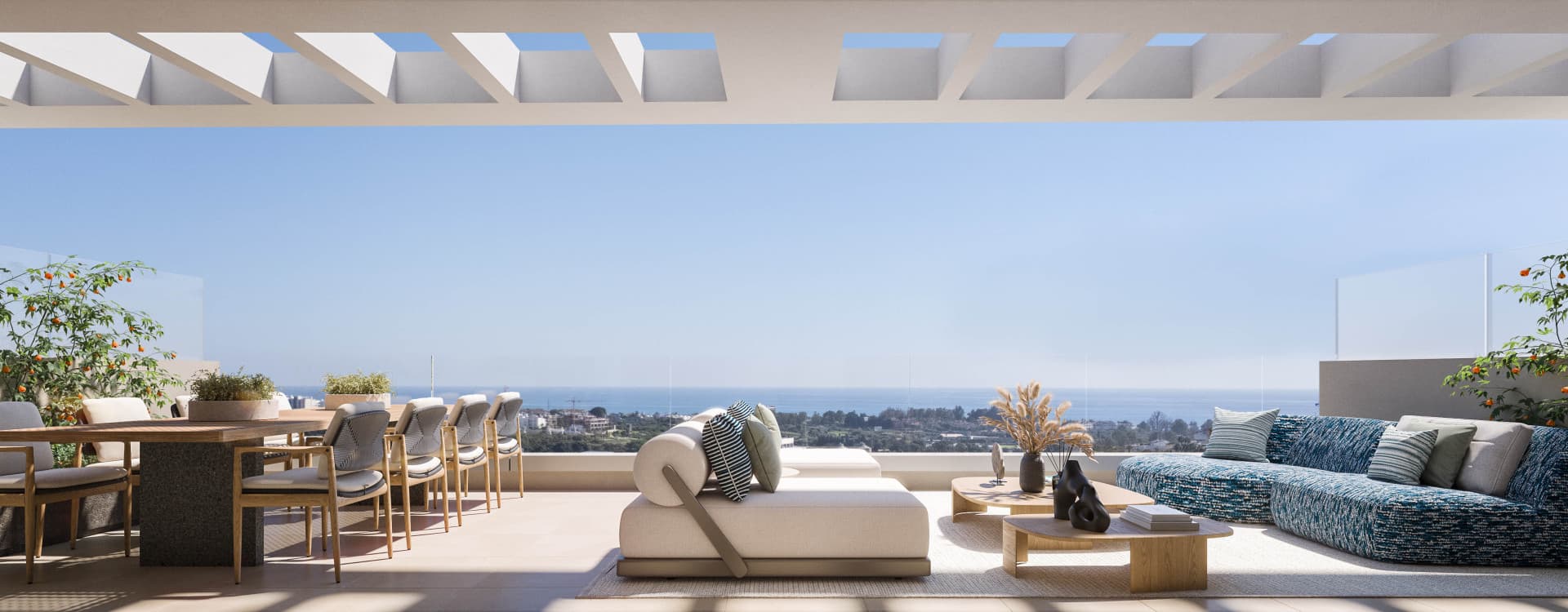
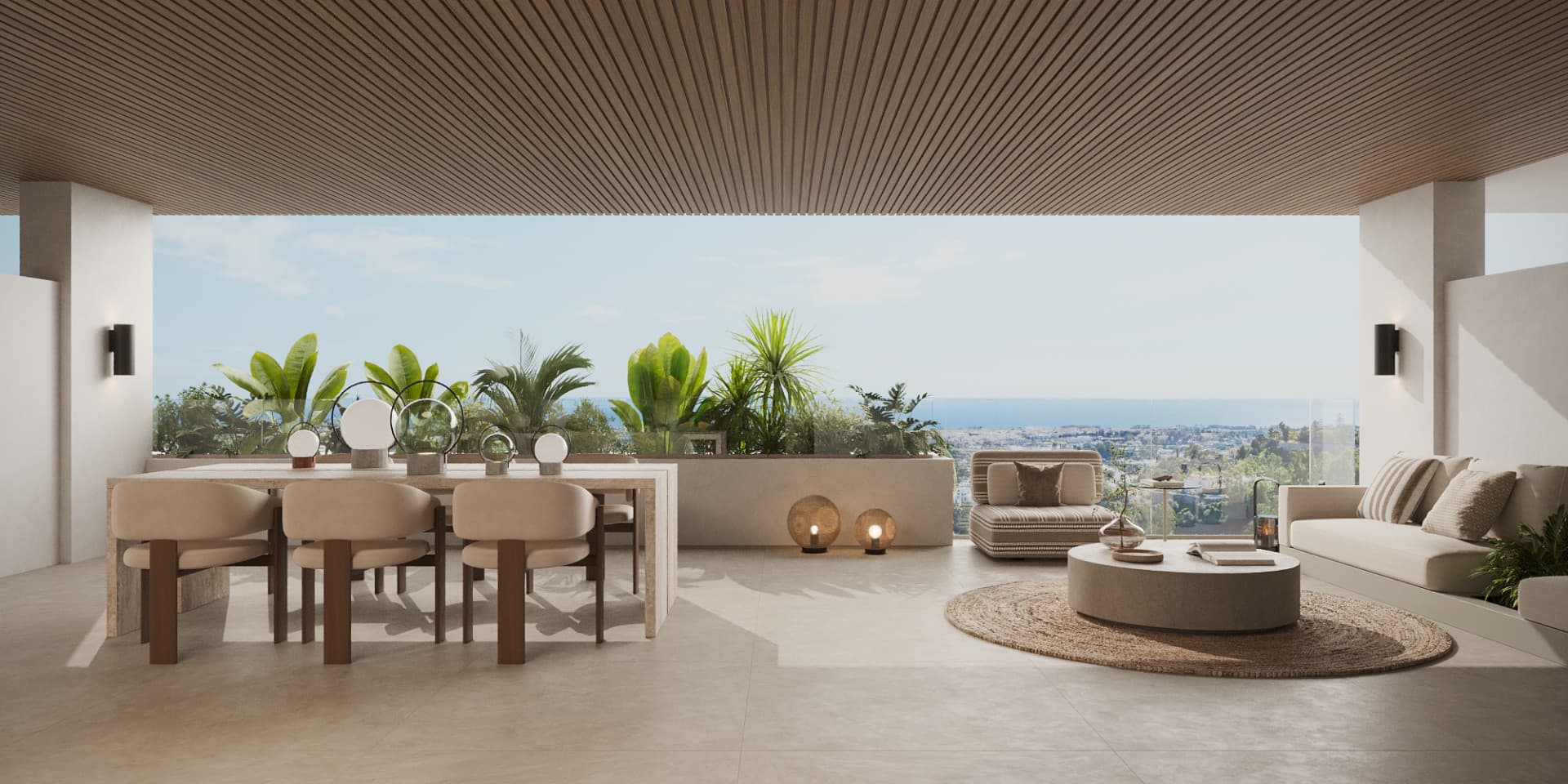
A duplex penthouse gives you the top of the building twice over — two interior storeys, and almost always a private roof solarium above them, so the living comes in layers: bedrooms and the main floor inside, then an open terrace up the stairs with room for loungers, an outdoor kitchen and a plunge pool. In Estepona most run to three bedrooms and three bathrooms, with two-bed versions in the smaller blocks and four-bed sea-front homes at the upper end. Built sizes typically sit between around 150 and 250 m² before you count the terraces — and the terraces are the whole point, often 60 m² off the living floor with another 80 to 100 m² of solarium above.
The format belongs to the newer, well-spaced developments rather than the old town — the best of them along the New Golden Mile between Cancelada and El Paraiso, in Bahia de la Plata, Torre Bermeja and the El Paraiso hills, plus the smaller blocks around Atalaya Golf and Selwo. That corridor also holds the international schools (Atalaya International, Mayfair, The International School Estepona) and most of the golf, so families, golfers and downsizers wanting a terrace without a garden tend to shortlist the same buildings. As a band, a solid three-bed on or near the New Golden Mile typically runs €600,000 to €1.2m; front-line beach and the full sea-and-Gibraltar solariums climb well above that. Some are priced on the view rather than the build, and we'll always tell you which ones and why — before the terrace talks you out of reading the survey.
Estepona's flower-hung old town — a working fishing port, twenty-plus kilometres of beach, and prices that still sit below Marbella next door.
Estepona sits on the coast roughly 80km west of Málaga airport and about 20 minutes short of Marbella, with Sotogrande, Gibraltar and the Sierra Bermeja mountains all close at hand. It is the town that got its regeneration right. The 'Garden of the Costa del Sol' project repainted and replanted the Casco Antiguo into an old quarter of geranium pots and ceramic murals, while keeping a genuine working fishing port and marina at its heart. That mix — a proper Spanish town that also happens to be international — is exactly why people who view Estepona tend to buy here rather than further east.
Who lives in Estepona
The buyer mix here is broad, and that is part of the appeal. The British are the largest single group and have been for years, with a deep network of clubs, cafes and charities behind them. Scandinavians have a long-standing presence, and Belgian and Dutch buyers have grown into a serious bloc, drawn by the value compared with home and the new-build developments that went up around the New Golden Mile and Selwo. Germans, French and a steady flow of Spanish buyers from Málaga and beyond round it out. You will find year-round residents and remote workers in and around the town centre and the port, retirees and second-home owners spread through the golf valleys inland, and families clustering near the international schools. It feels less of a holiday enclave than some of its neighbours and more like a place people actually live.
Architecture and property types
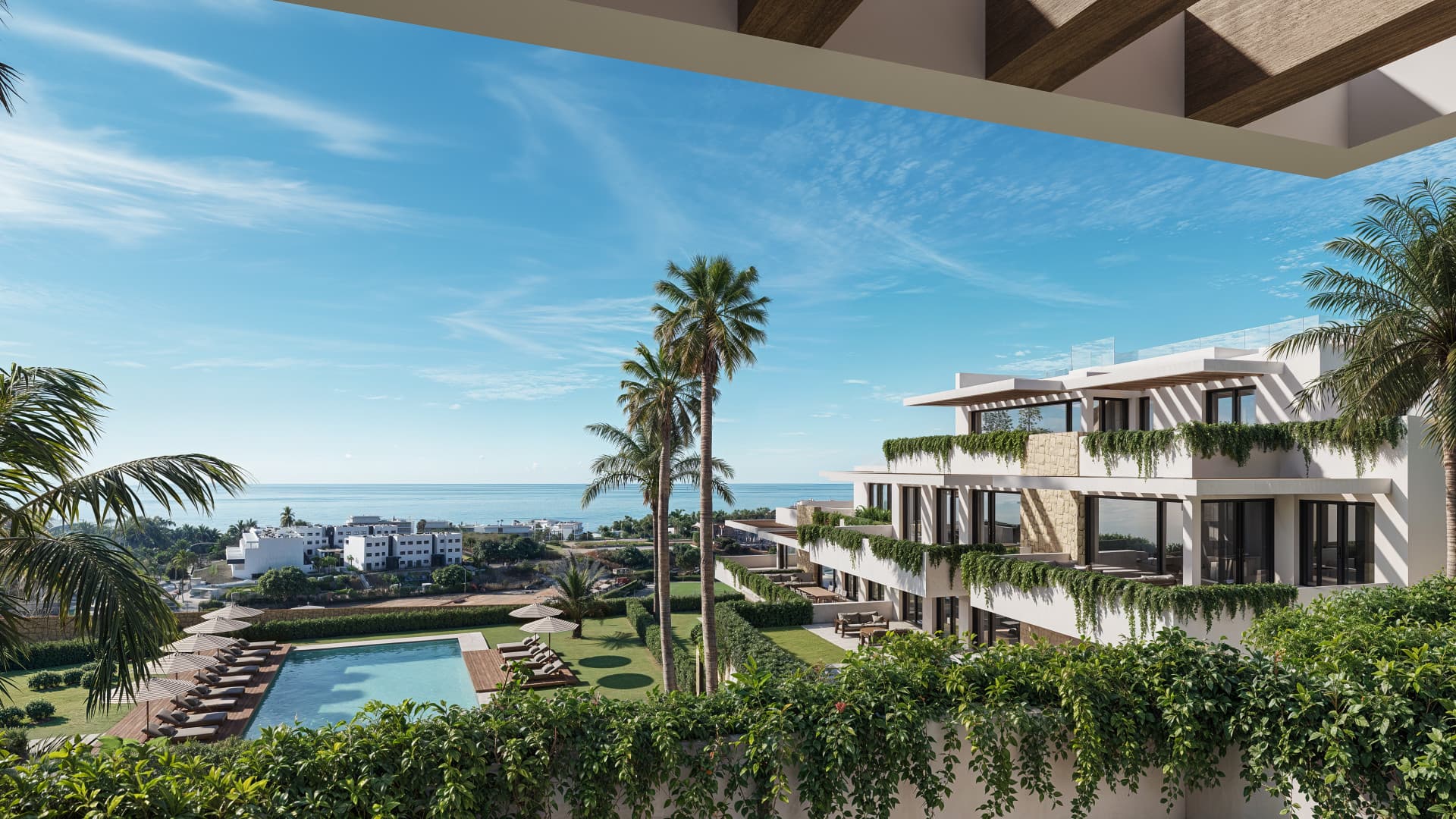
Apartments dominate the Estepona market, from town-centre flats a short walk from the beach to large, modern complexes along the coast with pools and landscaped gardens. Ground-floor apartments with private terraces are common and popular with anyone who wants outdoor space without the upkeep of a garden. Villas are the next big strand, ranging from established homes in the golf urbanisations to contemporary new-builds on elevated sea-view plots. Penthouses and duplex penthouses are well represented and prized for their roof terraces and views, and you will find town houses, semi-detached villas and the occasional building plot for those who want to design their own. Styles span classic Andalusian whitewash, the cream-and-arches Mediterranean look of the 1990s and 2000s golf developments, and the clean, glass-fronted minimalism of the newer schemes.
Price expectations
Estepona generally trades at a meaningful discount to equivalent locations in Marbella, and that gap is much of its appeal. As a rough guide, a two-bedroom apartment in the town or along the New Golden Mile typically runs in the low-to-mid hundreds of thousands of euros, with quality and sea views pushing toward the upper end of that band. True seafront and brand-new prime stock is a different conversation, generally starting around the seven-figure mark and climbing from there. New-build per-square-metre rates on the best elevated plots reach into the higher bands you would normally associate with Marbella, while older resale apartments inland offer some of the better value on this stretch of coast. Villas cover an enormous range depending on plot, position and age. We always quote you typical bands rather than a single number, and we will always tell you when we think a particular home is over-priced and exactly why.
Lifestyle, schools and getting around
Daily life in Estepona is genuinely easy. The promenade and port give you restaurants, a Sunday market and a working fishing fleet; the old town gives you tapas bars, the Orchidarium and a proper square to sit in; and the beaches stretch for more than 20 kilometres, from town sands to quieter coves out toward Guadalmansa and Bahía Dorada. Golf is everywhere inland, with El Paraíso, Atalaya Golf & Country Club, Estepona Golf and Valle Romano all within easy reach. Families are well served: Atalaya International School and the British-curriculum International School Estepona sit in and around El Paraíso, Colegio San José is a long-established bilingual option, and Atlas American School brings a US curriculum to the Selwo Hills. For getting around, the AP-7 toll motorway puts Málaga airport roughly 55 to 75 minutes away depending on traffic, Marbella around 20 minutes east, and Gibraltar's airport a similar run to the west. There is no train, so a car is more or less essential outside the town centre, but the coastal roads are good and Sotogrande and Puerto Banús are both quick hops.
How we work in Estepona
We have spent 20 years on this coast, and we treat Estepona the way we would if we were buying here ourselves — because in a sense we already did. We will walk you through the difference between a breezy front-line flat and an inland golf villa that needs air-conditioning by July, between an urbanisation with healthy community fees and one with a tired pool and a reserve fund that worries us. We will point out the over-priced listings as readily as the good-value ones, flag the works the town has planned near a given street, and tell you honestly when somewhere is not right for you. If you want a sensible, local read on buying in Estepona, with no hype and no pressure, drop us a line.