La Cala de Mijas — Mijas Costa's village by the watchtower, with wide sand, a working high street and golf on three sides.
Where La Cala sits
La Cala de Mijas is the coastal village of Mijas Costa, roughly midway between Fuengirola and Marbella — about ten minutes to the first, twenty to twenty-five to the second. It grew up around the Torreón, a watchtower built in 1773 that still anchors the seafront, and it has kept the things much of this coast lost along the way: a proper Spanish high street, a street market at the fairground every Wednesday and Saturday, and bars that trade all winter. The sand is generous — La Butibamba in front of the village, El Bombo a little further along — and the wooden boardwalk, part of the Senda Litoral, carries walkers and cyclists along the shore towards El Chaparral in one direction and Calahonda in the other.
Semis and villas, village and hillside
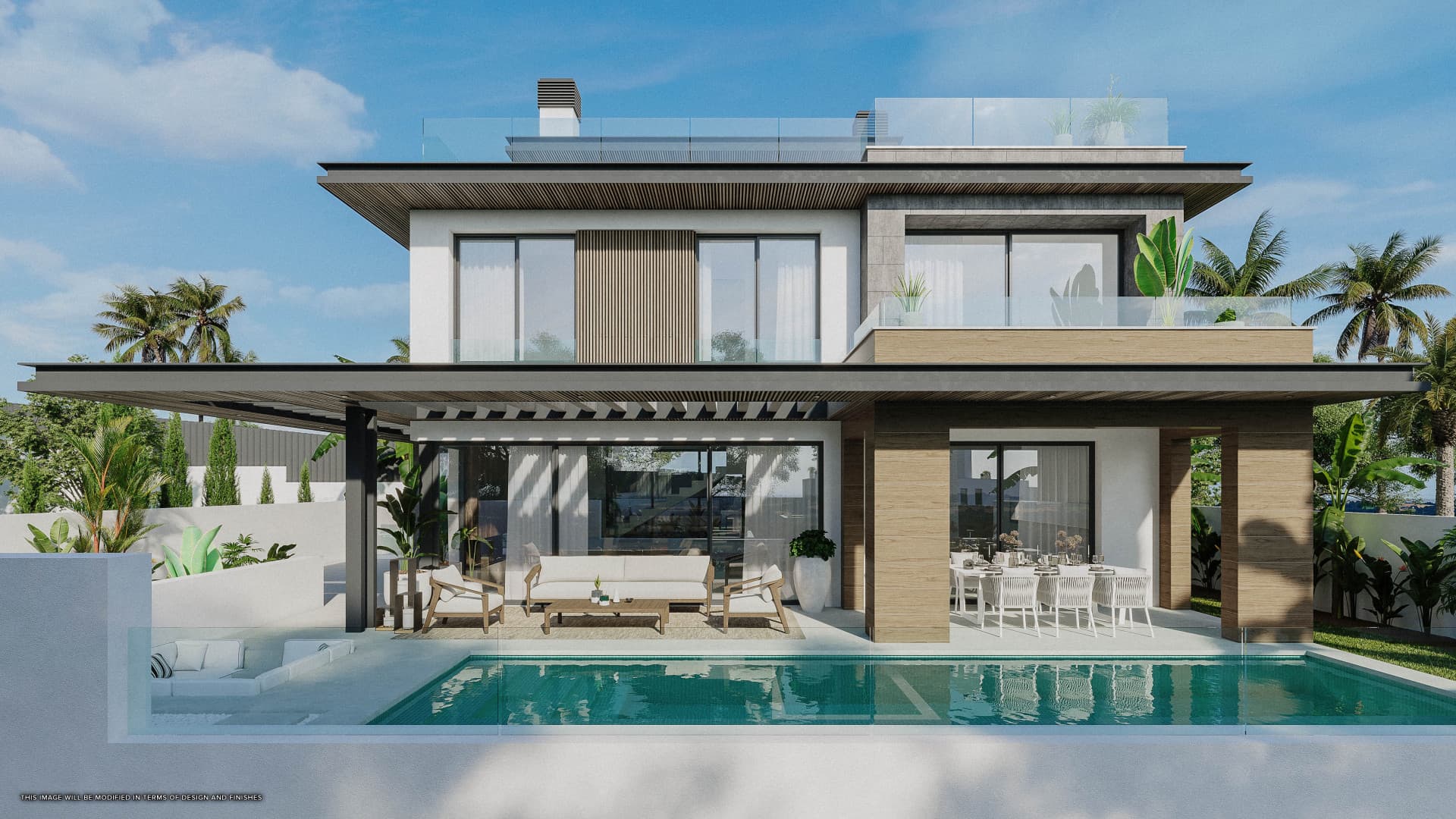
Semi-detached houses set the tone here, with detached villas a close second; apartments are thinner on the ground than elsewhere on this stretch. The older rows — El Limonar, Los Claveles, Las Buganvillas — sit on the Fuengirola side within walking distance of the centre, while Jardín Botánico, where streets such as Camino del Albero are lined with villas and semis, climbs gently behind. North of the A-7 a newer belt has grown up: La Noria, linked to the village by a footbridge in under ten minutes on foot, and phases such as Cala Serena and La Valvega, mostly modern townhouses and semis around shared pools. A semi or townhouse typically runs €300,000 to €550,000; villas generally start around €500,000 close to the village, with new builds from about €1 million and beach-side houses approaching €2 million.
Schools, golf and who settles here
Families come for the schools as much as the sand. CEIP El Chaparral, the village primary, and IES La Cala de Mijas, the bilingual state secondary, are both walkable from much of the village, and St Anthony's College — the oldest British school on the Costa del Sol — is about fifteen minutes away on the Camino de Coín, with the wider international choice in Fuengirola, Marbella and Benalmádena. Golfers have La Cala Resort ten minutes inland, with its three Cabell B. Robinson courses — Campo América, Asia and Europa — plus Calanova Golf five minutes up the hill and El Chaparral Golf Club along the coast. The result is a genuinely year-round community: Spanish families, British and Irish owners, Scandinavians, and a steady run of people who came for a fortnight and stayed.
Getting around
The A-7 passes the top of the village and the AP-7 toll road runs close behind it, which puts Málaga airport at twenty-five to thirty minutes and Marbella at twenty to twenty-five. The M-220 bus between Fuengirola and Marbella stops in the centre roughly every half hour, and the Cercanías C1 train at Fuengirola — ten minutes away — runs on to the airport and Málaga. The core of the village is flat and walkable, so plenty of owners manage with one car, or none. Worth knowing before you view: homes backing onto the A-7 hear it, and the difference between a quiet row and a noisy one can be a single street.
How we work in La Cala
We have spent twenty years on this coast, and La Cala is one of the places we know house by house. We will always tell you which homes are over-priced and why, which phases north of the motorway were built well, and which terraces hear traffic rather than the sea. If you are weighing the village against the golf hills behind it, or simply want a straight answer on what your budget buys here, drop us a line.